Hold the Pencil
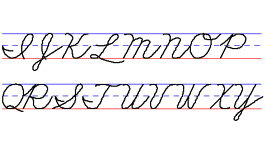
- demonstrates how letters are formed
- promotes a good pencil grasp and good posture
- encourages regular practice
The time-tested ergonomic way to hold a pencil is the tripod grasp. Most children can learn how to place their fingers in the tripod position, but if they have established another grasp, the tripod may feel awkward at first. Changing any habit is difficult, particularly when it involves muscles and coordination. Some children can change to the new grip within a few days, while others need a month or so. Adults tend to take even longer before they can consistently use the new grip.
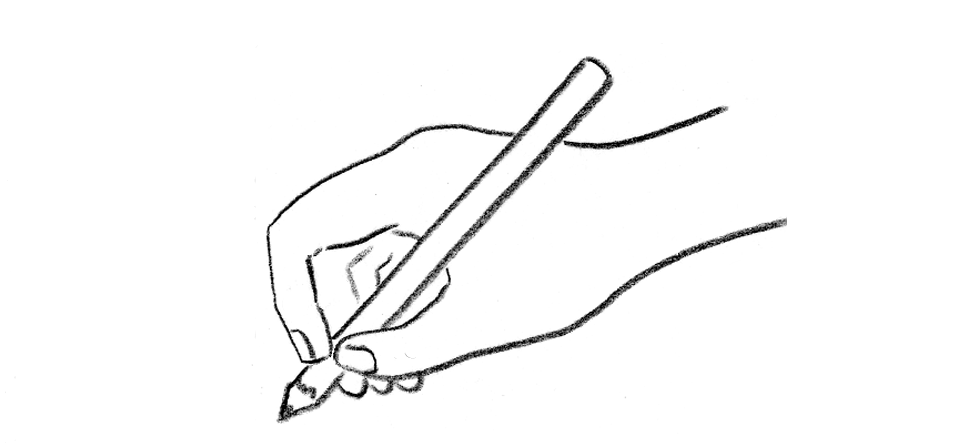
Finger positionThree fingers—the long finger, the thumb and the index finger—form a tripod to hold the pencil, as shown in the illustration. Index Finger RestsMany people put extra pressure on the index finger, hyperextending the first joint. (Check for pressure in the knuckle.) The tip of the index finger should rest on top of the pencil. Fingers Bend, SlightlyAll five fingers should bend slightly. (Some people pull their fingers into a fist. Some hold a pencil with their thumb straight.) A ball should be able to fit inside the hand. Training ToolsIt
The Writing CLAWcan be challenging to keep the fingers in the tripod position, but there are a variety of tools available to help keep the fingers in place. They are temporary tools, much like training wheels on a bicycle. See them in our store.
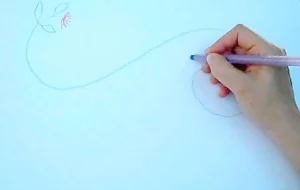
The Pencil Grip Position of the HandThe underside of the forearm and the thumb should line up. Some people hook the hand toward the body, pushing the elbow away from the body.) Spend some time practicing on vertical surfaces, such as an easel or paper taped to a wall, since it is natural while working vertically to hold the hand up and drop the elbow down. Position of the PencilThe pencil eraser should point toward the should, however the pencil position is not critical if the hand position is good. This rule is most helpful for left-handers, since it allows a better view of the freshly written words and the hand does not smudge the words. How does the Hand Feel?Understand the amount of tension needed to grasp the pencil: - Have the child pretend to hold a small stone tightly in their tripod fingers as you count together to ten. Release the pretend stone and discuss how your hands felt while holding the stones.
- Have the child pretend to hold a cooked pea gently in their tripod fingers and count to ten. After releasing the pretend pea, describe how your hands felt while holding the pea, How can a relaxed hand make writing easier?
Soft-Lead Pencil
Play Packs - Fine Motor SkillsTension or bearing down may improve as the child’s fine motor skills develop. Encourage playtime activities that use the pinching or grabbing motions—think of stringing beads, rolling clay, making a tower of toothpicks. More ideas and activities are available in PlayPacks.

Motivate children to want to practice. Draw, write, play tic-tac-toe—choose an activity the child enjoys so they look forward to practicing with you. Practice regularly (daily is best). Five minutes is fine for a five-year-old child, and ten to fifteen minutes is plenty for a child who is nine. Adults can practice whenever there is a spare moment.
Hold the Pencil FlierOver the years, we have sent out a flier with each of our store orders: Hold the Pencil. The flier provides the same information as shown on this webpage, but appears less “wordy” due to the formatting. The flier is now available in packages of 25. Give to parents of new students or members of your group. See it in our store.
Pencil Gripper for Training“At first, my son said that the pencil with the pencil gripper was uncomfortable, so I explained that it was uncomfortable because he was familiar with the other way of holding a pencil. I explained that as he got accustomed to the new grip it would feel better. The only time that I had him use the pencil with the gripper was while we made drawings together. After about six weeks, during a time when he was drawing on his own, I noticed that he held his pencil (no gripper) using the tripod grip. I said, “Look how you are holding your pencil.” He looked down at his hand and said, “I didn’t mean to do it!” We practiced together with the pencil that had a gripper on it a few more weeks, until he told me, “Mom, I don’t need this any more. I hold my pencil like this all the time.”
—Kim Stitzer


Tuesday, July 12, 2011


Reader Comments (11)
I thank you for posting this info.
Simon.
~Kim
Thank you.
1.) The OT probably showed you exercises he can do to strengthen and coordinate his hand. Keep practicing those exercises. Here's some fun things: stretch Silly Putty, string beads, squish clay.
2.) Draw with him. It requires many of the same skills used in writing. It may relieve some of the stress he's feeling toward writing, while building up his pencil skills. I've had moms come to me with similar stories as yours, assuring me that the child won't write with me. We start drawing, then follow it up with writing short sentences. In all cases, I would have never known the children didn't like to write if their moms hadn't told me. Of course, at school he has assignments from his teacher that he might balk at, but what you can do is build his writing skills at home in this fun way. No stress!
3.) Help him memorize the formation of each of the letters -- do it without a pencil in hand. Have him make letters using his finger in shaving cream on a cookie sheet. It's all so much easier when letter making becomes rote -- so he doesn't have to think about how they are made.
Try some of these things and let us know how he's doing.
~Kim
-Angie
There are several products I recommend you consider:
SOFT LEAD PENCIL - http://www.drawyourworld.com/pencils/
Another option is Gel Pens. I'm not a big fan of felt-tip pens because I feel like they "grab" the surface of the paper, but some people like them. The goal is for the mark to go on the paper with the least amount of pressure.
JUMBO GRIP - http://www.drawyourworld.com/grips-pencils/
This gripper supports the first AND second finger joint. My experience is with adults with arthritis who prefer this gripper over the standard-size gripper.
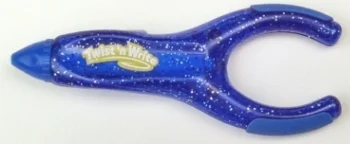
TWIST 'N WRITE - http://www.drawyourworld.com/twist-n-write/
The pencil is held slightly differently, but it is the tripod grasp and it requires much less pressure to make the mark on the paper.
HEAVYWEIGHT PENCIL - http://www.drawyourworld.com/heavyweight-pencil-pen/
This pencil seats in the hand and requires less pressure to hold in place while writing or drawing.
You might want to visit an art supply store with your son and look over the variety of pencils. There are pencils that are solid and heavy. There are a variety of soft-lead pencils. He can put them in his hand and try them out.
Let me know how it goes!
~Kim
I have a 11 year old son who has trouble writing for long as he has developed an unusual and tense pencil grip. I am interested in your products as I think they may help him, however the books look like they are aimed at a younger level. Can you advise on what you have that s suitable and appropriate for his age?
-Tanya
Hi Tanya,
You might be surprised -- the Draw Write Now lessons do appeal to older children. Try the lesson on
http://www.drawyourworld.com/blog/tiger-lesson-draw-write-now.html
and
http://www.drawyourworld.com/storage/site-pdf/dwnflier.pdf
I find that the older kids find Book 6 appealing:
http://www.drawyourworld.com/draw-write-now-book-6/
I taught a class with mixed ages—5 through 12—where everyone made the same drawing and worked along at their own level. I started with the simplest of lessons and was concerned that the 12 year-old boy would find it babyish. Instead he seemed relieved. He'd been struggling with writing to the point of crying when he had an assignment -- drawing with a little writing was a chance for him to get back to the basics and be successful. The results: At the end of the school year his mom brought me a three-page handwritten story (Star Wars or something like that.) It was a mess, but he'd done it on his own for fun, it was legible, and... it was three pages of writing!
The goal is to find something that will interest your son so that he can enjoy practicing a new grip. Like anything, it takes regular practice to change a habit. The sketching lessons may appeal to him:
http://www.drawyourworld.com/complete-a-sketch-advanced/
http://www.drawyourworld.com/other-items/
I hope this helps!
Try the sample lessons with him and see how he responds.
-Kim
As opposite as many think, I never was forced to write with my right hand. In fact I use the right hand most of the time (I use the left when the right is tired).
Lately I tried to correct my pen grip in my right hand, but the only result I got is changing the position of my thumb and my hand is starting to ache.
I will try again, I hope to succeed this time. I'm 30.
~ Kim