
We teach drawing and writing to children.
You can, too!
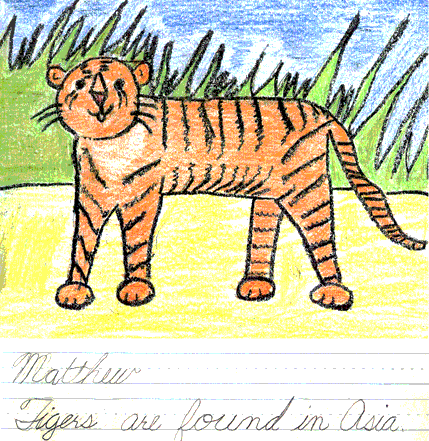
See the children’s art and writing (click tiger)
We begin with a drawing. The child draws the subject (tiger), then completes the picture (tall grass) using their own creative ideas. (see drawings)
Then, we write. You can focus the instruction on handwriting practice or use the time for other language arts skills. (see writing)
The lessons are fun and interesting! Each Draw Write Now book is a unit study. (see the topics)
“It’s not hard to show a child how to form letters and write sentences. The challenge with any handwriting program is motivating the child to practice regularly and carefully. Drawing makes handwriting practice fun.”
“Every child in my class feels their drawing is a masterpiece!”
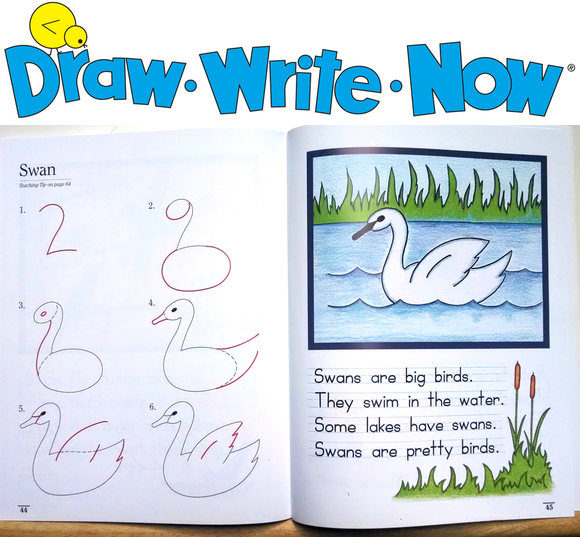
SEE OUR BOOKS: Draw-Write-Now

ABOUT US—we are the authors of Draw-Write-Now, Books 1-8.

SAMPLES: Draw a Whale, Tiger, Swan

Drawing Makes Writing Practice Fun!
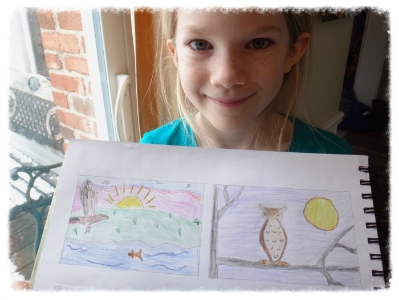
A Lesson When You Need It